Buy brezovka.eu ?
We are moving the project
brezovka.eu .
Are you interested in purchasing the domain
brezovka.eu ?
domain@kv-gmbh.de · 0541-91531010
Buy brezovka.eu ?
Imperfect or passé composé when?
The choice between imperfect and passé composé depends on the context and the specific action being described. The imperfect is used to describe ongoing or repeated actions in the past, while the passé composé is used for completed actions. If the action is a one-time event that happened in the past, the passé composé is more appropriate. However, if the action was ongoing or repeated, the imperfect should be used. **
When is the passé composé agreed?
The passé composé is agreed in gender and number with the subject when the auxiliary verb is "être." This means that the past participle must agree with the subject in gender and number. However, when the auxiliary verb is "avoir," the past participle does not agree with the subject. **


Similar search terms for Passé composé
Top-Angebote
Products related to Passé composé:
-
Inspired Finds Rustic Wooden Christmas House Pendant Cozy Mini Cabin Tree Ornament rustic CabinAdd a touch of warmth and nostalgia to your holiday decor with this charming wooden Christmas ornament. Designed as a miniature log house, it brings a cozy, storybook feel to your tree, instantly creating a welcoming festive atmosphere. Crafted from...35,99 $*Shipping: 0,00 $Secure redirect to the provider
-
Uplift Treasures Rustic Bear Metal Wall Art Cabin Decor Rustic Bear Metal Wall Art Cabin DecorProduct Description:Bring the spirit of the wilderness into your home with this rustic bear wall dcor. Featuring a striking metal silhouette of a bear surrounded by pine trees, it adds a bold and natural charmperfect for cabins, lodges, or...73,97 $*Shipping: 0,00 $Secure redirect to the provider
-
Saro "Winter Pine Tree Table Runner - Rustic Christmas Tree Forest Design for Holiday Dining & Cabin Lodge Entertaining - 16""x72"""Bring the beauty of a winter forest to your holiday decor with this Winter Pine Tree Table Runner featuring an allover evergreen tree pattern inspired by rustic woodland landscapes.48,49 $*Shipping: 0,00 $Secure redirect to the provider
-
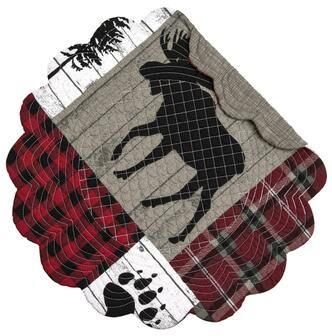
C&F Home Hayden Placemat Set of 6 Lodge Cabin Nature Rustic Gray and Red Patchwork Pattern Cotton ReversibleWith a classic printed patchwork of wilderness motifs and coordinating red plaids, the Hayden tabletop collection brings a touch of rustic lodge style to any dining room.63,00 $*Shipping: 0,00 $Secure redirect to the provider


-
When is the passé composé used?
The passé composé is used in French to express actions that were completed in the past. It is formed with the auxiliary verb "avoir" or "être" in the present tense, followed by the past participle of the main verb. This tense is commonly used to talk about specific actions or events that happened at a definite point in the past. It is also used to describe a series of completed actions or to talk about actions that have a direct impact on the present. **
-
What is the French Passé Composé?
The French Passé Composé is a compound past tense used to talk about completed actions in the past. It is formed by using a helping verb (either "avoir" or "être" conjugated in the present tense) followed by the past participle of the main verb. The choice between "avoir" and "être" as the helping verb depends on the main verb and whether it is transitive or intransitive. The Passé Composé is one of the most commonly used past tenses in French. **
-
Can you correct the passé composé?
Yes, the passé composé can be corrected by adjusting the auxiliary verb and the past participle to match the subject and the tense of the sentence. For example, in the sentence "Hier, je a mangé une pomme" the correct form would be "Hier, j'ai mangé une pomme" where "j'ai" is the correct form of the auxiliary verb "avoir" for the subject "je" and "mangé" is the correct past participle of the verb "manger." Making these adjustments ensures that the passé composé is used correctly in the sentence. **
-
What is the French passé composé?
The French passé composé is a compound past tense used to talk about completed actions in the past. It is formed with the auxiliary verb "avoir" or "être" in the present tense, followed by the past participle of the main verb. The choice between "avoir" and "être" as the auxiliary verb depends on the main verb and whether it is transitive or intransitive. The passé composé is commonly used in spoken and written French to describe specific actions that occurred at a definite point in the past. **


How is the passé composé formed?
The passé composé is formed by using the present tense of the auxiliary verb "avoir" or "être" followed by the past participle of the main verb. The choice between "avoir" and "être" as the auxiliary verb depends on the main verb and whether it is transitive or intransitive. For example, with the verb "parler" (to speak), we would use "avoir" as the auxiliary verb: "J'ai parlé" (I spoke). However, with the verb "arriver" (to arrive), we would use "être" as the auxiliary verb: "Je suis arrivé" (I arrived). **
How do you conjugate the Passé Composé?
To conjugate the Passé Composé in French, you typically use the auxiliary verb "avoir" or "être" followed by the past participle of the main verb. The choice between "avoir" and "être" depends on the verb being used and whether it is a transitive or intransitive verb. The past participle of regular -er verbs is formed by replacing the -er ending with -é, for -ir verbs you replace the -ir ending with -i, and for -re verbs you replace the -re ending with -u. Irregular verbs have unique past participle forms that need to be memorized. **
Top-Angebote
Products related to Passé composé:
-
Inspire Essentials Rustic Bear Metal Wall Decor For Cabin Lodge And Nature Inspired Homes Rustic Bear Metal Wall Decor For Cabin Lodge And Nature Inspired HomesBring the spirit of the wild into your home with this striking bear wall decor designed to capture the beauty of nature. Crafted with a bold silhouette and forest inspired details, it creates a warm and rugged atmosphere perfect for cozy interiors....34,98 $*Shipping: 0,00 $Secure redirect to the provider
-
Uplift Curations Rustic Metal Bear Wall Decor Cabin Lodge Forest Animal Wall Art For Home & Outdoor Spaces Rustic Metal Bear Wall Decor Cabin Lodge Forest Animal Wall Art For Home & Outdoor SpacesBring the wild beauty of nature into your home with this striking bear wall decor designed to capture the spirit of the forest. Crafted with intricate detailing, this metal bear wall art features a bold silhouette surrounded by trees and mountain...90,00 $*Shipping: 0,00 $Secure redirect to the provider
-
Inspired Finds Rustic Wooden Christmas House Pendant Cozy Mini Cabin Tree Ornament rustic CabinAdd a touch of warmth and nostalgia to your holiday decor with this charming wooden Christmas ornament. Designed as a miniature log house, it brings a cozy, storybook feel to your tree, instantly creating a welcoming festive atmosphere. Crafted from...35,99 $*Shipping: 0,00 $Secure redirect to the provider
-
Uplift Treasures Rustic Bear Metal Wall Art Cabin Decor Rustic Bear Metal Wall Art Cabin DecorProduct Description:Bring the spirit of the wilderness into your home with this rustic bear wall dcor. Featuring a striking metal silhouette of a bear surrounded by pine trees, it adds a bold and natural charmperfect for cabins, lodges, or...73,97 $*Shipping: 0,00 $Secure redirect to the provider
-
Imperfect or passé composé when?
The choice between imperfect and passé composé depends on the context and the specific action being described. The imperfect is used to describe ongoing or repeated actions in the past, while the passé composé is used for completed actions. If the action is a one-time event that happened in the past, the passé composé is more appropriate. However, if the action was ongoing or repeated, the imperfect should be used. **
-
When is the passé composé agreed?
The passé composé is agreed in gender and number with the subject when the auxiliary verb is "être." This means that the past participle must agree with the subject in gender and number. However, when the auxiliary verb is "avoir," the past participle does not agree with the subject. **
-
When is the passé composé used?
The passé composé is used in French to express actions that were completed in the past. It is formed with the auxiliary verb "avoir" or "être" in the present tense, followed by the past participle of the main verb. This tense is commonly used to talk about specific actions or events that happened at a definite point in the past. It is also used to describe a series of completed actions or to talk about actions that have a direct impact on the present. **
-
What is the French Passé Composé?
The French Passé Composé is a compound past tense used to talk about completed actions in the past. It is formed by using a helping verb (either "avoir" or "être" conjugated in the present tense) followed by the past participle of the main verb. The choice between "avoir" and "être" as the helping verb depends on the main verb and whether it is transitive or intransitive. The Passé Composé is one of the most commonly used past tenses in French. **
Similar search terms for Passé composé
-
Saro "Winter Pine Tree Table Runner - Rustic Christmas Tree Forest Design for Holiday Dining & Cabin Lodge Entertaining - 16""x72"""Bring the beauty of a winter forest to your holiday decor with this Winter Pine Tree Table Runner featuring an allover evergreen tree pattern inspired by rustic woodland landscapes.48,49 $*Shipping: 0,00 $Secure redirect to the provider
-
C&F Home Hayden Placemat Set of 6 Lodge Cabin Nature Rustic Gray and Red Patchwork Pattern Cotton ReversibleWith a classic printed patchwork of wilderness motifs and coordinating red plaids, the Hayden tabletop collection brings a touch of rustic lodge style to any dining room.63,00 $*Shipping: 0,00 $Secure redirect to the provider
-
Inspired Living Rustic Bear Metal Wall Decor For Cabin & Lodge Living Rustic Bear Metal Wall Decor For Cabin & Lodge LivingBring the quiet strength of the wilderness into your home with this beautifully crafted bear wall decor. Designed for nature lovers and cabinstyle interiors, this piece blends rugged charm with timeless simplicity. Featuring a striking silhouette of...23,97 $*Shipping: 0,00 $Secure redirect to the provider
-
Inspire Select Bear Metal Wall Decor Rustic Cabin Wall Art With Pine Tree Forest Design For Lodge & Hunting Decor blackBring the spirit of the wilderness into your space with a bold and rustic decorative piece. Perfect for cabin owners, hunters, and nature lovers, it adds a warm, outdoorsy charm to any room. The detailed bear and pine tree design creates a cozy...78,98 $*Shipping: 0,00 $Secure redirect to the provider
-
Can you correct the passé composé?
Yes, the passé composé can be corrected by adjusting the auxiliary verb and the past participle to match the subject and the tense of the sentence. For example, in the sentence "Hier, je a mangé une pomme" the correct form would be "Hier, j'ai mangé une pomme" where "j'ai" is the correct form of the auxiliary verb "avoir" for the subject "je" and "mangé" is the correct past participle of the verb "manger." Making these adjustments ensures that the passé composé is used correctly in the sentence. **
-
What is the French passé composé?
The French passé composé is a compound past tense used to talk about completed actions in the past. It is formed with the auxiliary verb "avoir" or "être" in the present tense, followed by the past participle of the main verb. The choice between "avoir" and "être" as the auxiliary verb depends on the main verb and whether it is transitive or intransitive. The passé composé is commonly used in spoken and written French to describe specific actions that occurred at a definite point in the past. **
-
How is the passé composé formed?
The passé composé is formed by using the present tense of the auxiliary verb "avoir" or "être" followed by the past participle of the main verb. The choice between "avoir" and "être" as the auxiliary verb depends on the main verb and whether it is transitive or intransitive. For example, with the verb "parler" (to speak), we would use "avoir" as the auxiliary verb: "J'ai parlé" (I spoke). However, with the verb "arriver" (to arrive), we would use "être" as the auxiliary verb: "Je suis arrivé" (I arrived). **
-
How do you conjugate the Passé Composé?
To conjugate the Passé Composé in French, you typically use the auxiliary verb "avoir" or "être" followed by the past participle of the main verb. The choice between "avoir" and "être" depends on the verb being used and whether it is a transitive or intransitive verb. The past participle of regular -er verbs is formed by replacing the -er ending with -é, for -ir verbs you replace the -ir ending with -i, and for -re verbs you replace the -re ending with -u. Irregular verbs have unique past participle forms that need to be memorized. **
* All prices are inclusive of VAT and, if applicable, plus shipping costs. The offer information is based on the details provided by the respective shop and is updated through automated processes. Real-time updates do not occur, so deviations can occur in individual cases. ** Note: Parts of this content were created by AI.